
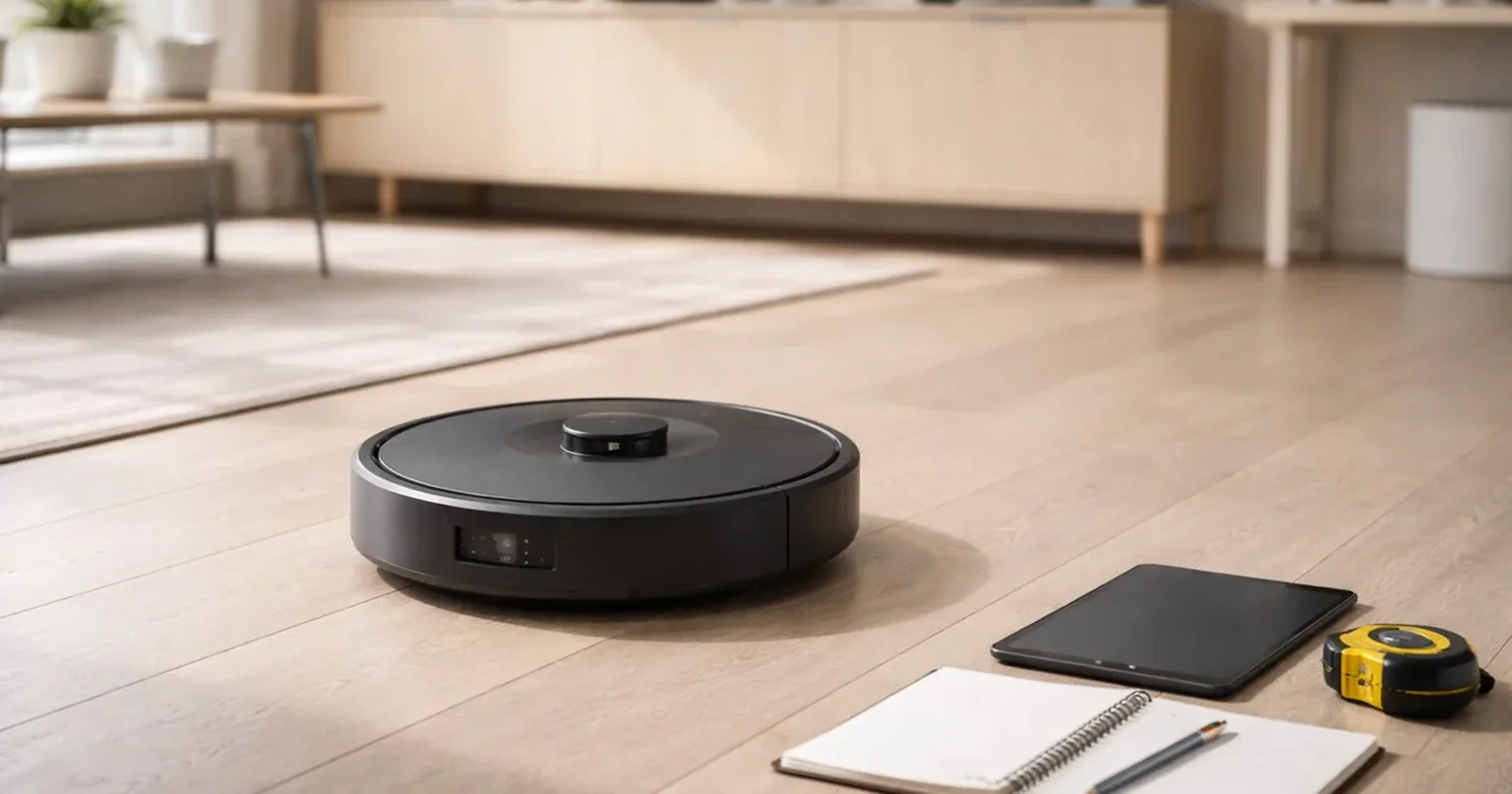
Our evaluation categories
Spec sheets rarely predict ownership. The differences that matter show up in mapping reliability, pickup consistency, edge behavior, and ongoing hassle.
Tip: swipe left/right to compare. On mobile, the “Category” column stays pinned.
| Category | What we look for | Typical red flags |
|---|---|---|
| Navigation & mapping | Room coverage, obstacle handling, reliability over repeated runs, recovery from “problem areas” | Missed rooms, repeated bumps, frequent “lost” behavior, map corruption |
| Pickup (hard floor) | Fine dust, crumbs, edge pickup, consistent results across runs | Scatter, streaky pickup, weak edges, leaves debris lines |
| Pickup (carpet) | Pet hair handling, agitation, deep pickup, anti-tangle design | Hair tangles, poor agitation, clogged intake, performance drop after a week |
| Mopping | Stain reduction, pad contact, edge reach, water control, dock cleaning practicality | Over-wetting, weak pressure, poor edges, messy upkeep |
| Usability | App stability, schedules, room controls, zones/no-go areas, multi-floor behavior | Buggy maps, confusing controls, unreliable schedules, broken routines |
| Maintenance | Brush tangles, bin/bag workflow, filter access, parts availability, dock upkeep | Frequent clogs, messy emptying, hard-to-find consumables, leak-prone docks |
| Noise | Perceived loudness, tone (whine vs. whoosh), station emptying volume | High-pitched whine, harsh dock emptying, “can’t run it at night” loud |
How we choose “top picks”
“Best overall” is usually the model that stays dependable in the most homes: reliable navigation, consistent pickup, reasonable maintenance, and a stable app experience. Budget picks emphasize value and low ongoing hassle. Premium picks must meaningfully improve day-to-day outcomes, not just add features on paper.
What earns a recommendation
- Reliable mapping across multiple runs
- Consistent pickup without frequent babysitting
- Maintenance that doesn’t become a weekly headache
- Controls that work (zones, schedules, room selection)
What can disqualify a model
- Frequent stuck events or unreliable maps
- Hair tangles that require constant manual cleanup
- Mopping that over-wets or barely changes outcomes
- App issues that break day-to-day use
Update policy
We refresh guides when meaningful models change, pricing shifts substantially, or new information changes the best pick for most people. Major updates are reflected on each guide’s “Last updated” line.
Canada note
We pay attention to Canadian realities like winter grit/salt dust, threshold transitions, mixed flooring, and parts availability.
Affiliate disclosure
Some links may be affiliate links. This does not affect our recommendations. See Disclosure for details.